5.23.21
Theodore Roosevelt fell for the cowboy life out here as a young man, ran two cattle ranches in what’s now Theodore Roosevelt National Park before they failed. He kept coming back to this stretch of eastern North Dakota — sometimes called the Other Badlands — for the rest of his life. Loved the ruggedness of it, but it was also where he went to grieve, after his wife and his mother died on the same day in 1884.
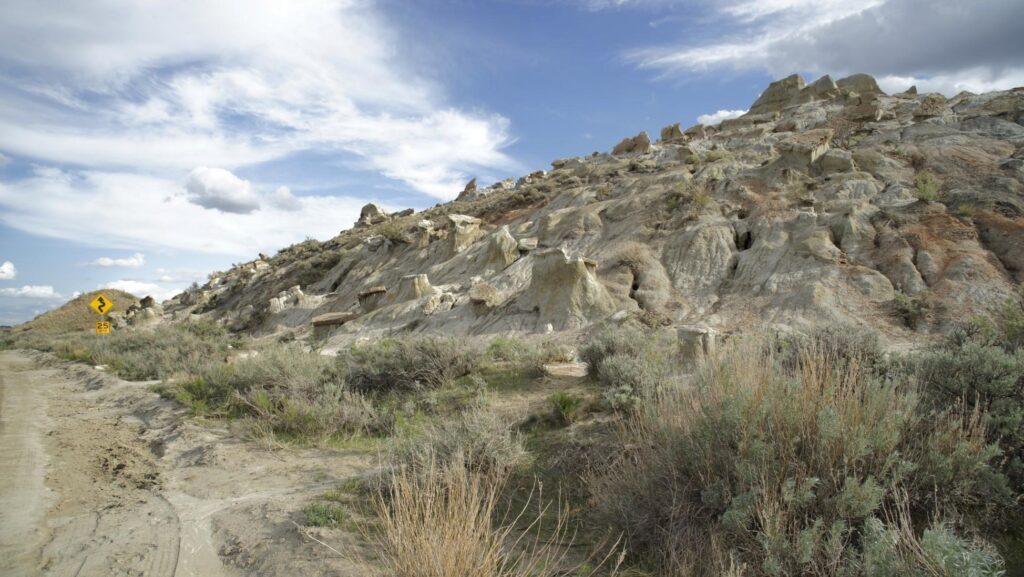
The North Dakota Badlands share a lot with the South Dakota version — the same kind of layered, fantastically shaped sandstone, wide grassland, plenty of wildlife — but the differences show up once you’re in it. The formations here run less pointed, some almost capped on top, and the whole area reads more like a plateau sitting above the Little Missouri River valley. Along with the red and white rock there’s gray clay in patches and a black seam of coal running through parts of it.
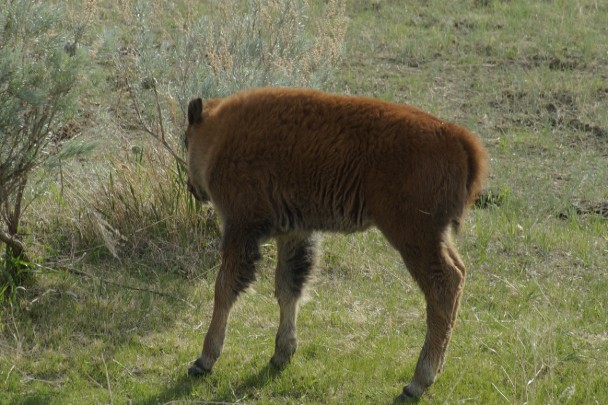
More wildlife here than in the South Dakota park, if that’s possible. Deer, obviously, and there’s supposed to be a small herd of longhorn steer we never actually spotted. More bison too. Same as down south, they go wherever they want, and one evening we nearly drove into a herd of about twenty crossing right onto the road — males, females, awkward calves getting nudged along by the adults. Nothing to do but
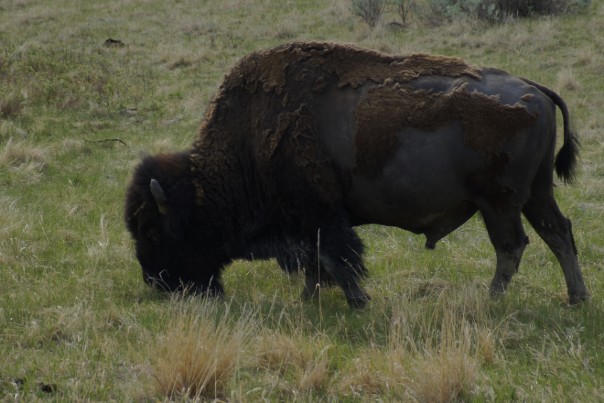
stop and wait; the bison ignore the vehicles, which is exactly what you want from them, and they take their time. This herd’s coats ran a shade lighter brown than the South Dakota
bison, shaggy and half-shed from winter, same as down there. One big bull stood sideways across the road at the tail end of the group, holding position like a guard until the rest had cleared — I’ve seen that same behavior out of bison in the Yukon.
We’d barely relaxed after that when we came around a bend into an even bigger herd, animals on both shoulders and on the road itself. One passed close enough alongside the
car that we could hear it huffing — not at us, more likely at a calf lagging behind on the far side. There’s something that gets to you about being that close to something that old and that big. They know we have to yield, and they take their time about letting us. Signs all through the park warn against approaching them — they can turn aggressive fast, and they can run three times faster than a person, so we kept our distance and let out a breath neither of us realized we’d been
holding once we were clear.
The park’s another one you can see plenty of from the car, which worked out since our second day there turned cold, windy and drizzly after a sunny first day. A few determined hikers were out on the trails regardless — the deeper into the park we drove, the fewer people we saw at all.
The North Unit has formations called cannonballs — mineral concretions that emerge from the sandstone cliffs as they erode, some nearly perfect spheres about two feet across, scattered down the hillsides like something a giant left lying around. Nobody’s entirely sure how they end up that round. You could still see the previous night’s rain in the rock — I touched one of the cliff faces and it dented easily under a finger, soft as a well-packed sandcastle.
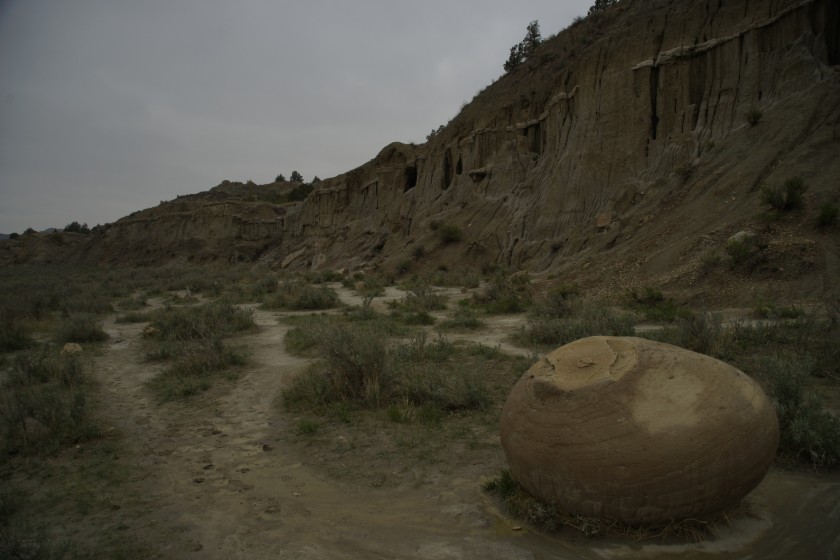
Strange that something that fragile-feeling has held its shape this long.
If I had to rank them, I’d say Theodore Roosevelt National Park comes in just a notch below the Badlands proper, but only just — each one’s got its own character worth the visit.