6.5.21
The Big Horn County Historical Museum sat so close to where we’d been camped nearly a week that it’s almost embarrassing we nearly missed it — didn’t show up on any map we had, and the freeway sign advertising it was so
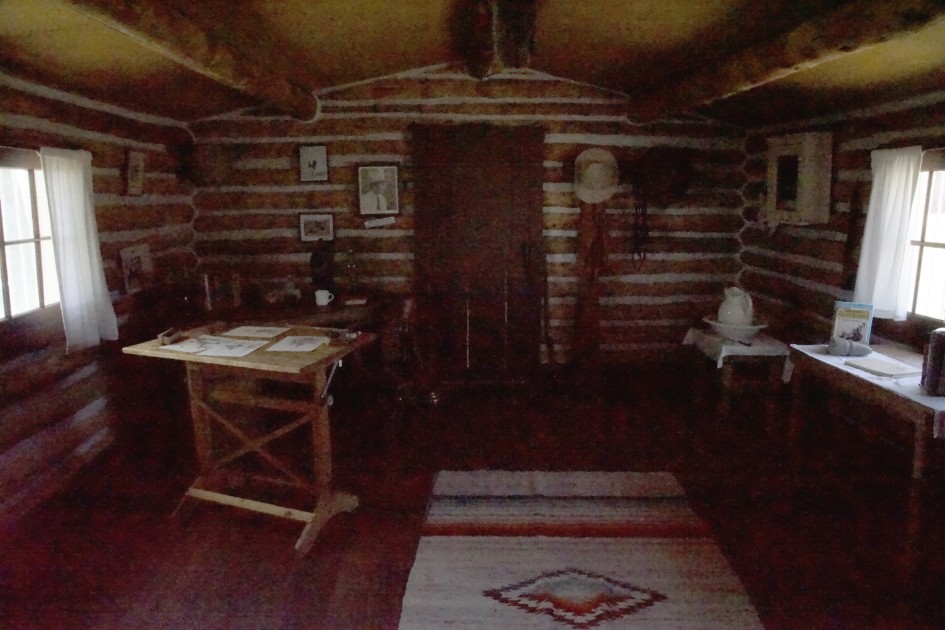
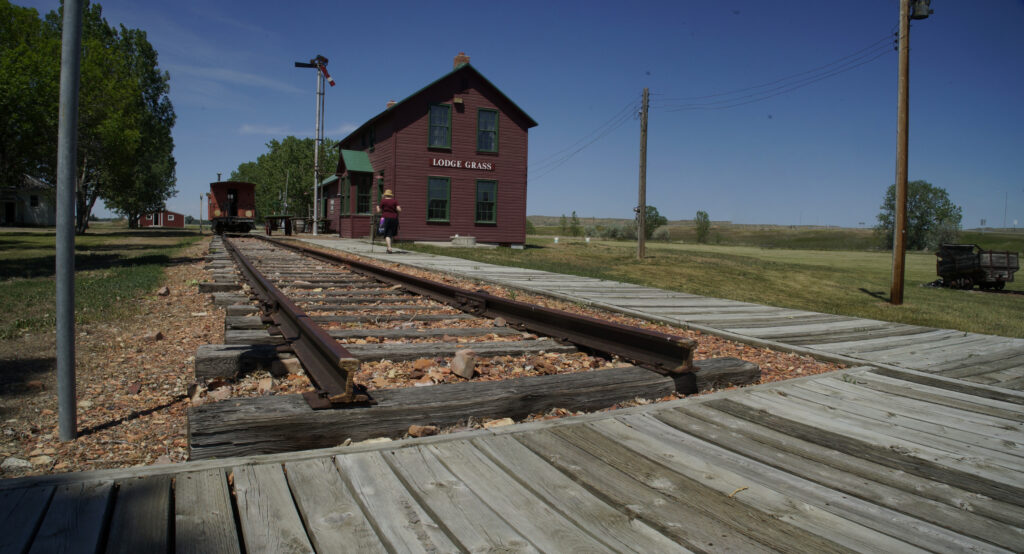
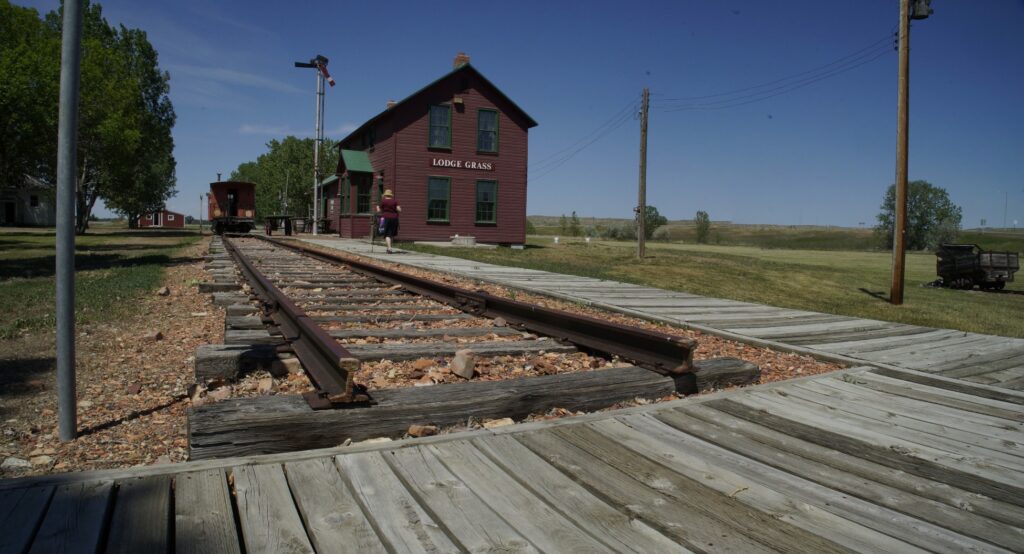
old and faded we genuinely wondered if the place had closed down years ago. It hadn’t. Turned out to be a real trove — several acres, a whole cluster of buildings, the main ranch house as the centerpiece with a school, church, store, railroad depot, doctor’s office, and farm outbuildings brought in from elsewhere over the years. Will James’ actual cabin and studio were on the property too, the studio staged like he’d just stepped out for a minute. Only
building we couldn’t get into was the funeral parlor, window broken in the storm the night before — we saw downed branches around suggesting that storm hit harder here than it had at our own campground nearby.
We’ve seen plenty of history museums built around old buildings and artifacts, but this one was curated with more care than most. Every building, including the second-floor living
quarters above the store and depot, was loaded with period detail — real quilts and coverlets, a corset tossed over a chair like someone had just taken it off, kids’ toys, books, kitchen cupboards stocked like someone still lived there.
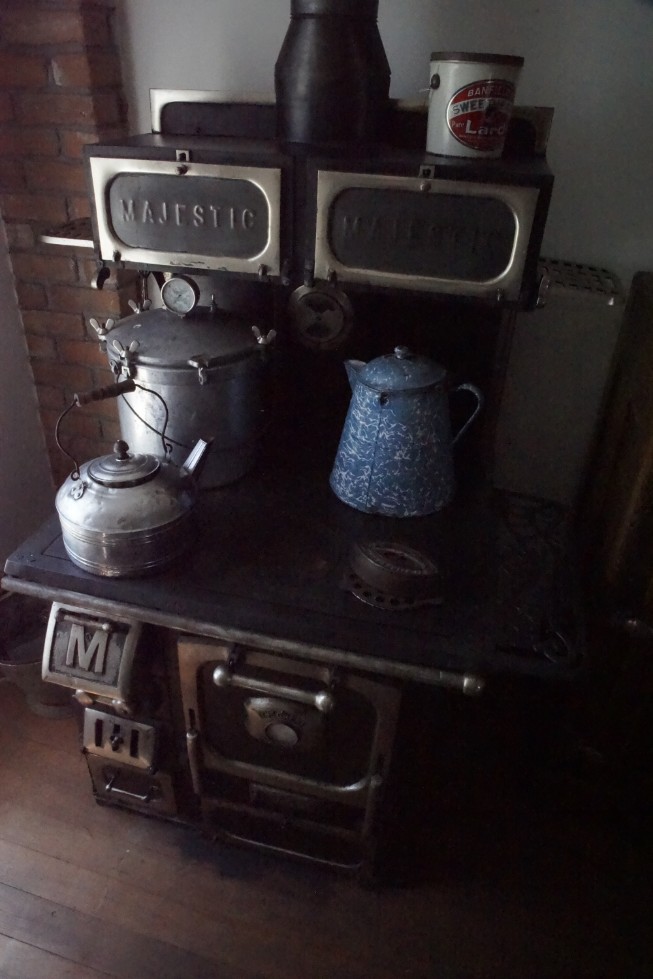
Small quarters by today’s standards, no electricity or running water, but they read as cozy rather than cramped
— you could practically hear the families who’d lived in them.
The railroad depot looked like the occupants had stepped out mid-task — leather suitcases stacked up, calendars still on the walls, ledgers open on the desks. The old slaughterhouse had papier-ma, che- carcasses made by local high school art students, a nice touch. There was an antique mechanical produce scale in the store labeled the “Computer Scale,” and a kid’s homework assignment still sitting on a desk — a Fourth of July flag tribute, carefully colored in.
Buildings connected by wooden walkways, shade trees throughout, benches everywhere inscribed with donor names — good thing, because there was enough to see that we spent close to three hours on the property.
The museum proper wasn’t large but was packed with artifacts from the Little Bighorn battlefield, Native American items, wagons, saddles, period clothing, another general store setup. Most of what it covered ran from right after the battle — around 1900 — through the ’20s, ’30s, and later. A full 1940s filling station sat reconstructed on-site, complete with a vintage pickup, pumps, and period signage. Reminded me of Lu’s dad when we walked into what used to be a stage station,
now converted into a garage housing older buggies and automobiles, including several beautifully kept 1940s fire trucks.
By the time we left, we felt like we’d gotten a genuinely full picture of the area’s history — prehistoric pictographs, Native buffalo hunts, conflict with government troops, all the way up through the closing of the one-room schoolhouses in the 1950s and early ’60s. A fitting close to our time around Billings. Heading west tomorrow.