6.2.21
You meet people on the road you’ll probably never see again, but some of them stick with you anyway. There was the guy who noticed water running out from under our trailer and flagged down the campground owner to get it shut off before it became a real problem. He had a setup worth describing — a tent pitched on top of his pickup, and a big screened gazebo done up like a proper living room, chairs, side tables, small beds with toys scattered around. I figured kids or grandkids. Turned out the beds were for his two dogs. He called the gazebo the “marriage saver,” which I understood completely — everybody traveling in close quarters needs somewhere to retreat to. Only complaint he had with the arrangement was that if he wanted to get up early to fish, he couldn’t, because his wife would still be asleep up on the truck.
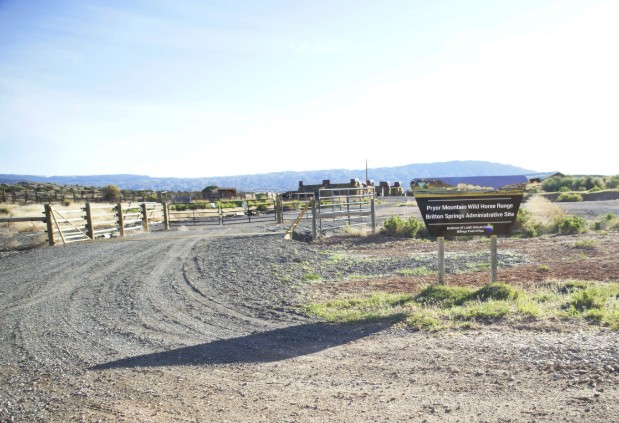
He also somehow already knew the whole story of our detour out to the wild horse range and the night we didn’t make it back until the next day — the campground owner had apparently been telling everyone. No idea what people made of that one, crazy or foolish, but nobody we talked to seemed tempted to try the Pryor
Mountain roads themselves after hearing about it.
Breakfast in Lovell, Wyoming, a table of older men struck up
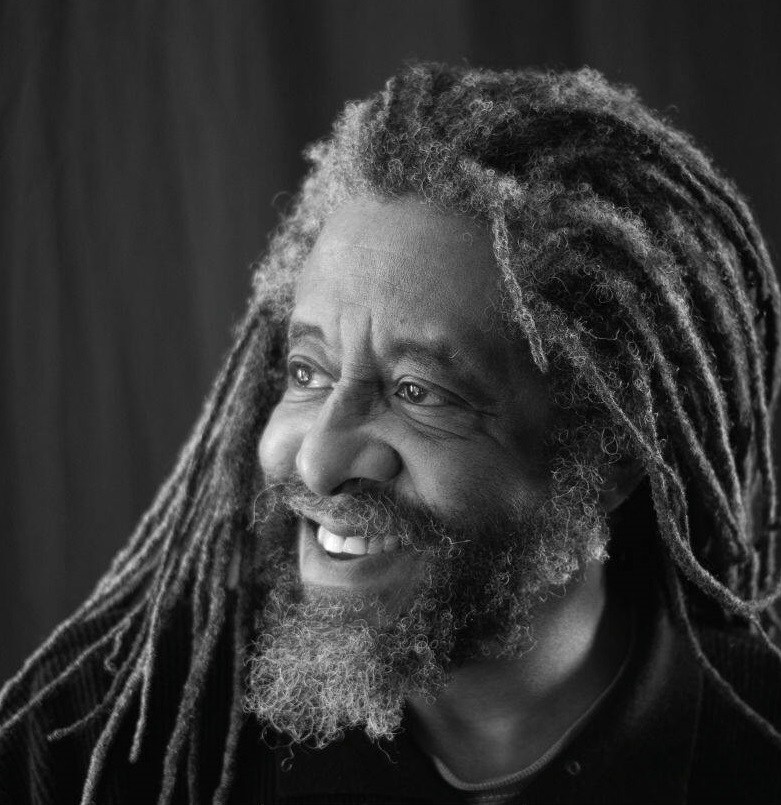
conversation, the usual where-you-from stuff. One of them looked at my hair and said, “That’s quite a hairdo you’ve got there. We don’t see that much around here,” then asked how I got it into dreadlocks and how I keep it up. Genuinely curious once he found out there wasn’t much maintenance involved — that’s kind of the whole point. I appreciated the honesty of it, no judgment, just curiosity.
A kid on a bike outside a gas station on the Crow Reservation called out, “I like your hair!” I get a fair amount of that out here. Same stop, a woman coming out with her groceries asked me straight out, “Are you lost?” Not Crow, not exactly a typical tourist either — I stand out regardless of where we are on this trip, but especially here. It’s never come across as hostile, always just honest interest. One guy, identified himself as Crow, was panhandling outside another C-store and told me flat out, “I’m not going to lie to you, I want money for a beer.” I gave him something for the honesty alone. Found out later the reservation itself is dry, so that gas station just over the line does steady business for exactly that reason.
June 2nd and 3rd we hit two very different outdoor history sites. Pictograph Cave State Park is a set of caves cut into high stone cliffs, drawings going back — by the estimates at the visitor center — as far as 4,500 years in the deepest layers, with more recent work around 2,000 years old. Weathering and some vandalism have made a lot of it hard to make out with the naked eye; the exhibits inside did a better job showing what the drawings originally looked like. Animals, people, some in what might’ve been ceremonial dress, plus bows and rifles mixed in showing later additions. Pictographs are painted on with iron oxide and charcoal; petroglyphs, by contrast, are carved straight into the rock.
Lu couldn’t do the whole thing with me — the caves face west and the sun got to be too much for her, not much shade on the walkways up, and the glare reaches right into the cave mouths. She turned back before the third cave. Of the three, the second had a trail marked “Not maintained — use at your own risk,” and I found another sign further along warning the same cave was closed for falling rock. Rattlesnake warnings scattered throughout too. Spectacular scenery, but I get why she wasn’t relaxed up there.
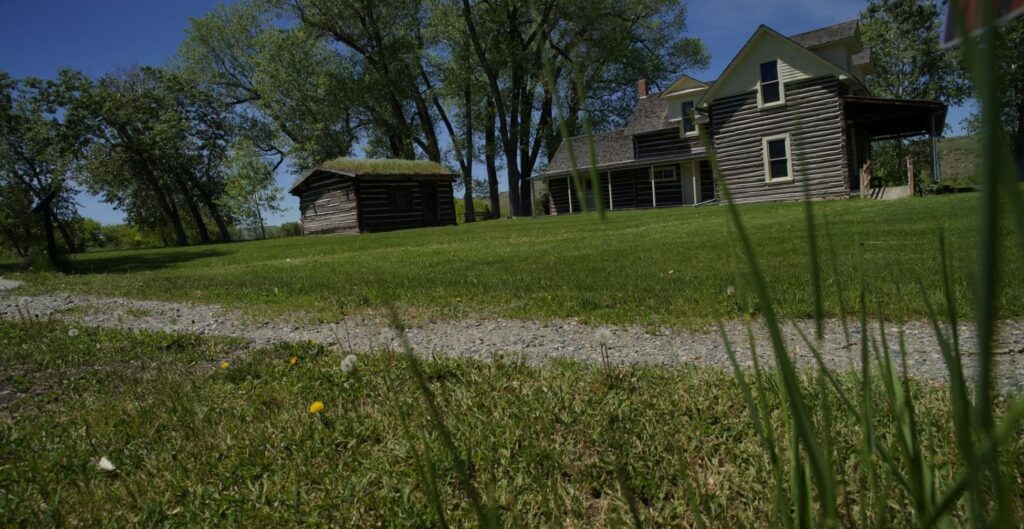
The ranger at Pictograph Cave pointed us toward Chief Plenty Coups State Park for the next day, and it turned out to be the better of the two stops. Chief Plenty Coups survived the Battle of Little Bighorn and led the Crow Tribe for decades afterward. The park’s built around his ranch house, outbuildings, and the gravesite where he’s buried alongside his first and second wives. He and his second wife put the land into a trust specifically so it would stay open to everyone.
As a boy, he’d had a vision that the bison would eventually be replaced by cattle, so when it actually happened in his lifetime he wasn’t caught off guard. His whole philosophy was that survival meant adapting — if the land was going to be farmed and ranched, the Crow needed to become farmers and ranchers too, so that’s exactly what he did. Built a working ranch on his allotment, ran a store where he kept meticulous records despite
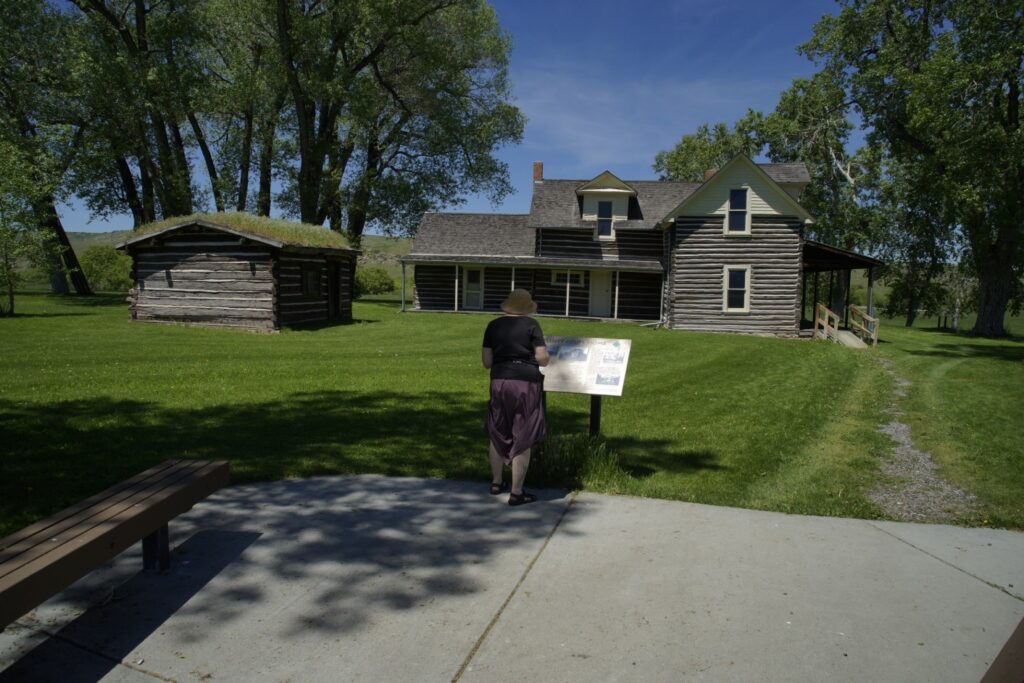
never learning to read or write, using symbols and marks to track every customer’s tab.
The ranch house is still standing near a creek lined with trees he planted himself, now grown in. A mowed path runs along the creek through the trees, quiet except for birdsong and running water — genuinely peaceful, and welcome shade after the previous day.
Toward the end of the loop there’s a flat white rock where visitors have been leaving small tokens for years, the way people toss coins in a fountain — jewelry, pens, keychains, even a flowered cloth mask.
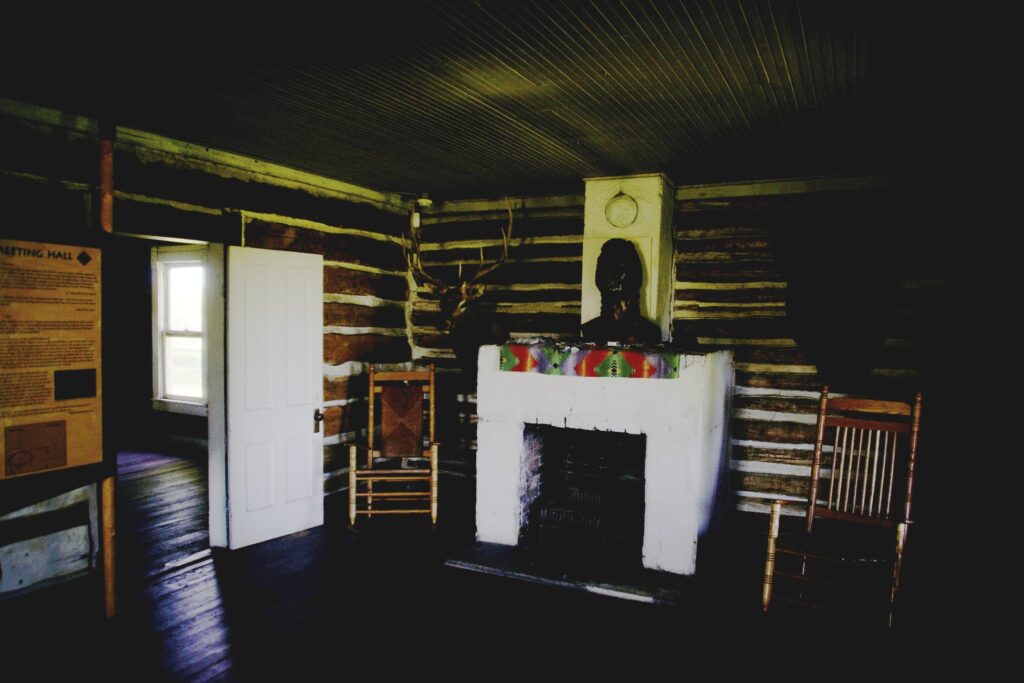
Inside the house there’s living space and a meeting room where the Chief conducted both tribal and ranch business, plus photos showing he kept a traditional tipi up on the same land for years alongside the house. He lived to 84, died in 1932, honored as the last officially recognized chief of the Crow. Governance today runs through a three-branch tribal system instead.
Worth the visit, though sobering to read what he had to say about how white men treated their own laws and religion as something to invoke when convenient and ignore otherwise
— saying one thing, doing another. His advice to his people has stuck with me since:
“Education is your most powerful weapon. With education, you are the white man’s equal; without education, you are his victim, and so shall remain all your lives.”