Saturday, October 3
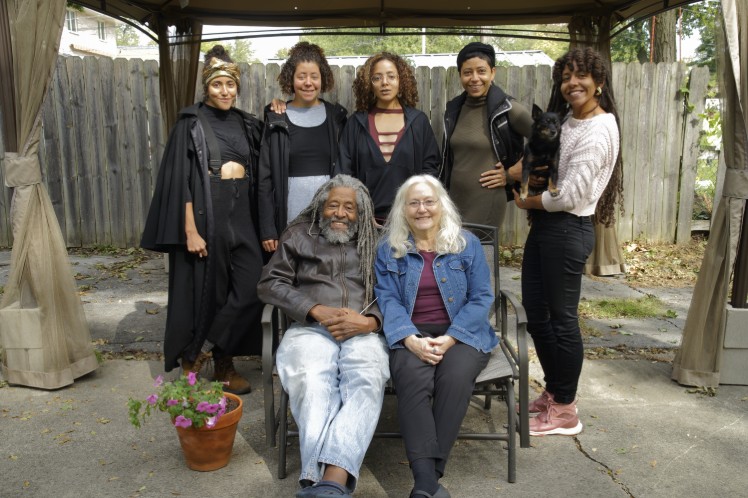
Family photos in the yard before we could even leave — Lu likes to keep that tradition going no matter what the weather’s doing, and this year it was a cold rain, so we were all pretty miserable standing there smiling. We got on the road around 2:30. Not a color-tour trip exactly, more a “this was the week we had” trip.
Somebody at a gas station told us we’d missed peak color by about a week. Fine by me — I’ve never been the type to chase a leaf.
We’d been warned this part of the country might not think the way we do politically, but honestly, it was yard signs for both sides the whole way up, and nobody treated us like anything but two people pulling a trailer. People are people.
Made it to Lake DuBay Shores in Mosinee around 9:30 that night. Cold night — and it turned out to be colder than it should have been, because somewhere between me, the guys at the trailer shop, and Lu, nobody had checked the propane before we left. Woke up freezing at 5 a.m. We piled on blankets and waited it out. By the time we got to the campground office at 9 to buy propane, it was 30 degrees outside. We just went and got breakfast instead — no point fighting the cold on an empty stomach.
Sunday, October 4
Grocery run, then a long, good drive north. The color kept getting better the farther we went — reds, browns, gold. I saw signs for Ottawa National Forest but it wasn’t on any map we had, and the internet wasn’t reliable enough to sort out whether we could camp there, so we didn’t chase it.
Headed for the visitor center at the north end of the Porcupine Mountains — not far as the crow flies, but 25 miles of mountain road eats up time. Every campsite in the park was booked until Wednesday. The guy at the desk was friendly enough, though he took his
sweet time with the woman ahead of us who was doing backcountry camping, and then gave us the same treatment once it was our turn. We ended up at Big Bear Campground just outside the park boundary — three nights, though we had to move after the first because our site was already spoken for. Heat in the trailer felt like a luxury after that cold night.
Internet only worked near the campground office by the lake, where they keep a fire going, but it was too cold to sit out there long. Just enough to check in with the family.
Monday, October 5
Windy all night, muddy from rain. We had to hang around camp until we could switch sites.
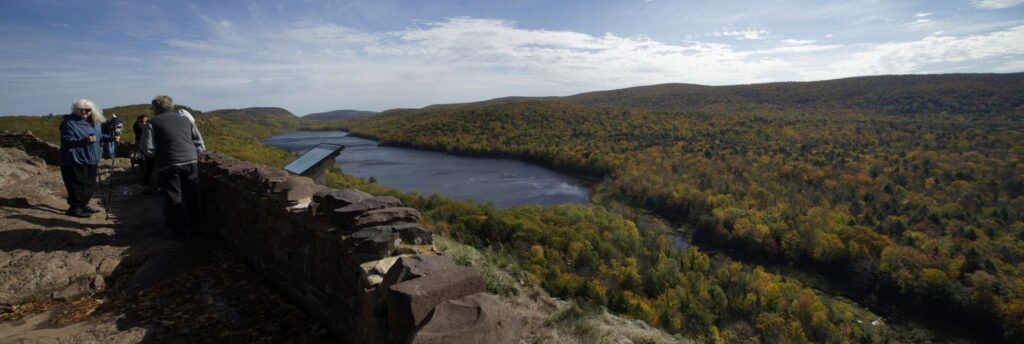
Then out to Lake of the Clouds — a mile and a half long, only 15 feet deep, with a trail along the rock escarpment above it. The wind roaring through the trees the whole time. Rock’s easy to lose your footing on, but there are stone walls so you’re not going off the edge. I was glad Lu had her poles — that trail was rougher than it had any right to be for an unrated hike. We passed a young woman in a wool sweater and heeled ankle boots, out there with a group of Chinese tourists, and I kept wondering how she
wasn’t sliding straight off the rock. None of her friends were dressed like that.
We lost the trail entirely on one of the “interpretive” paths about the old mining operations
— the blue paint dots on the trees just gave out on us, and we had to turn back. Still a tough hike even unfinished. At the end, some guy — sounded like a retired EMT — said, “As we used to say in the ambulance, if they’re fogging the mirror, they’re okay.” Good line.
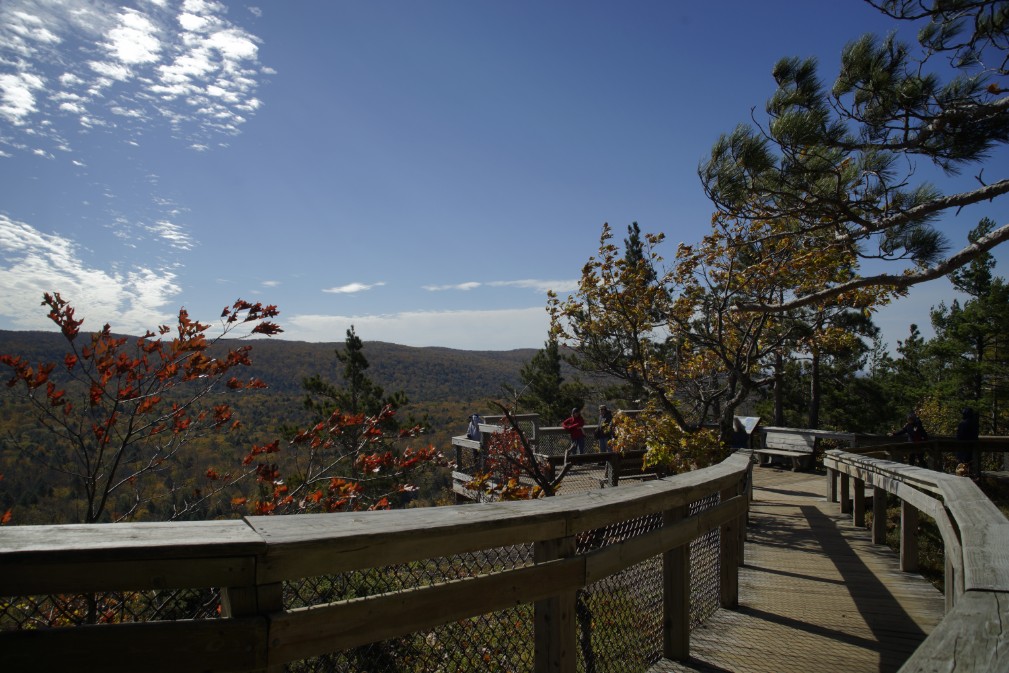
Summit Peak in the afternoon — short trail, half a mile, but it goes straight up. Near the top it turns into a boardwalk with
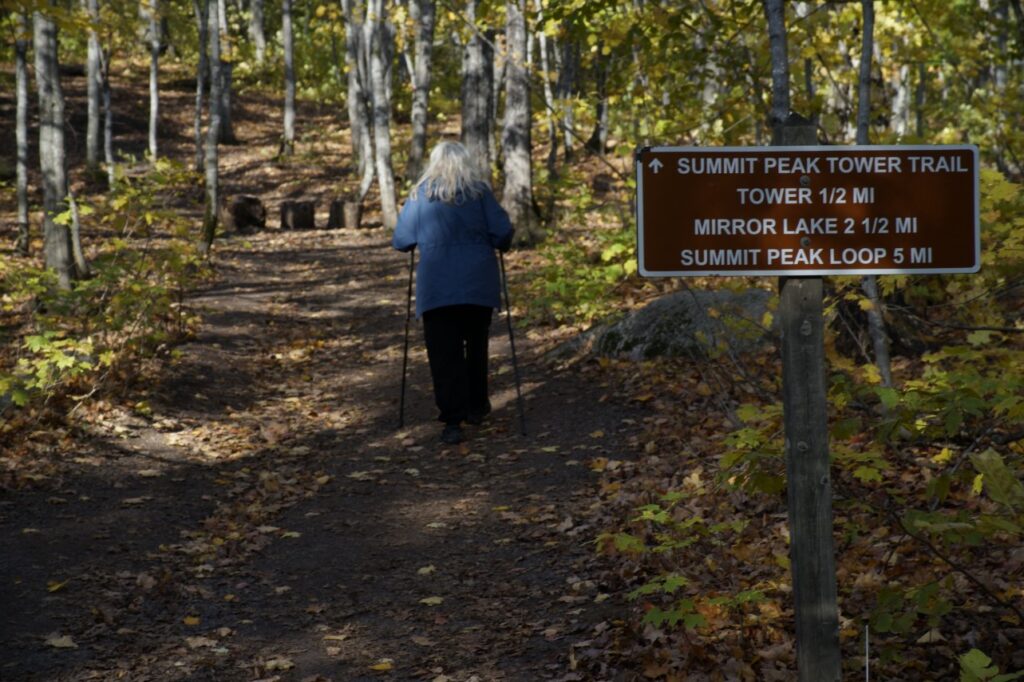
what one guy swore was 31 flights of stairs, then a 40-foot observation tower on top of that. I figured, we’d come this far. The view was wide open — mountains, lake — though it never really translates to a photo; the water just goes flat in pictures. Couldn’t see the Apostle Islands that day. On the way down we met a young couple, dating nine months, asking how long Lu and I had been married. Chicago people too. We were beat by the end, but a good kind of beat.
Looked into the bike trails before we left for the day — turned out those are cross-country ski trails, not much maintained for summer riding, and better suited to serious mountain bikers than to us. Between that and the mud from the rain, biking wasn’t happening this trip.
I’d been wanting fish for dinner, so we asked around and got pointed to the Konteka — named after an old Ojibwa chief, billed as a supper club but really more of a restaurant/bar/pool hall/bowling alley combination. Rumor has it they advertise bear sightings from the windows, maybe even feed them to keep the show going, though we didn’t see any that night. Good thing I hadn’t bothered changing — jeans and flannel were the uniform in there. We got walleye pike, baked potato, salad. Ran into the EMT guy from the trail, finishing dinner with his wife — they explained that after a day of hiking, getting up again just isn’t appealing. I understood that completely by then. Drove back slow through real darkness — no other cars, no lights, nothing for miles once you’re near the shore of a lake that big. Glad we’d put new headlights on the truck before this trip.
Tuesday, October 6
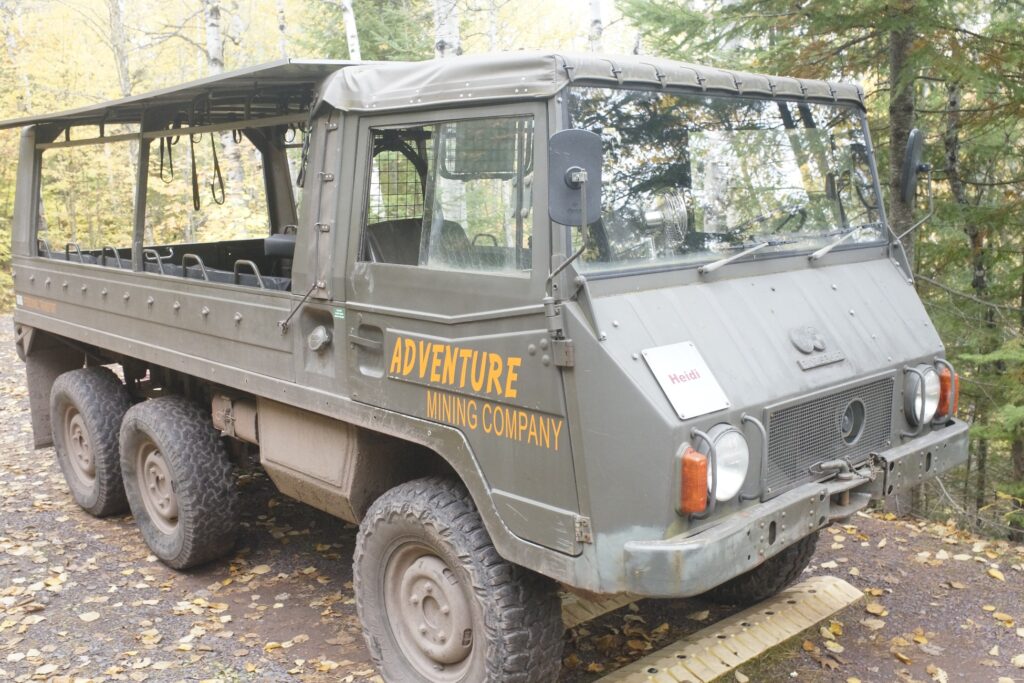
Mine tour in the morning — the Adventure Mining Company, named for Adventure Mountain, not for the marketing. Real mine, ran 1850 to 1920. This area’s copper comes out as pure elemental copper, which sounds like a good thing until you learn it means it’s harder to get out of the ground and harder to process than copper mixed with other rock. This particular mine never turned a profit — the copper came in scattered pockets instead of a lode. One chunk weighed 20 tons and had to be shaved down over years just to remove
it. Miners worked three-man teams by candlelight with drill bits and sledgehammers, making about a dollar a day — four times the going wage, but for brutal work in shafts barely five feet tall, because nobody figured the miners needed to stand up straight anyway. Less dangerous than coal mining at least — no gas, fewer cave-ins.
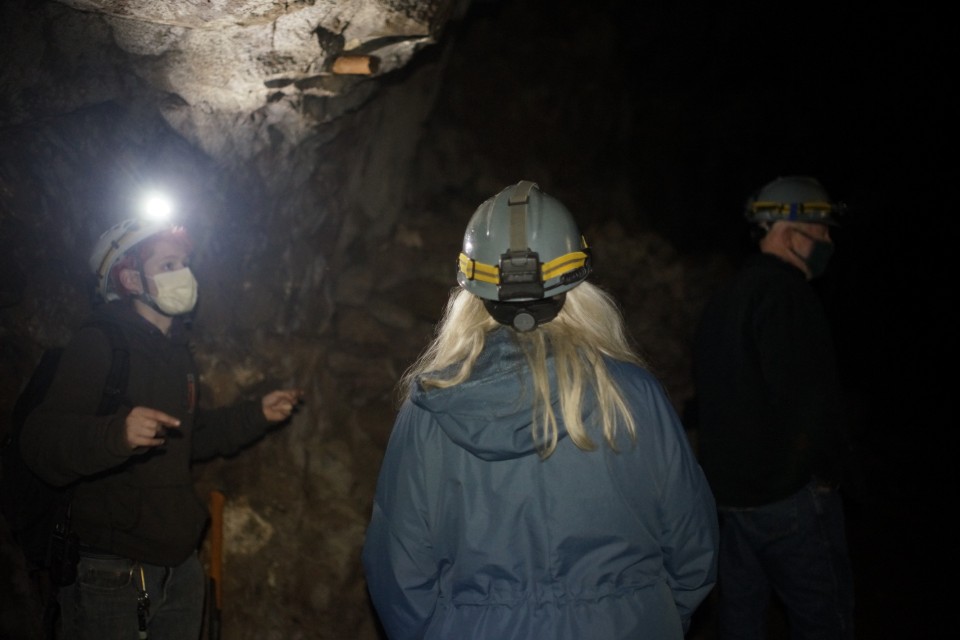
Our guide was a young woman named Dean, a civil engineering student at Michigan Tech with a differential equations exam later that day. She knew the geology cold and had a good feel for the human side of it too. Thirteen levels in that mine; we only saw the first.
Got out to the entrance in an old Swiss military transport vehicle — they’ve got two of them, named Heidi and Hans.
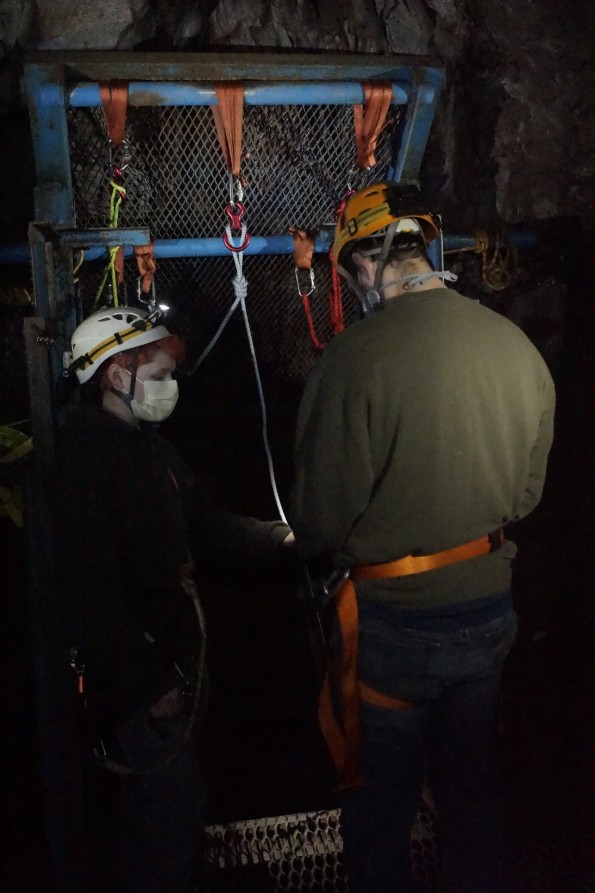
Heidi handled that steep, rutted mountain trail like a roller coaster; you hold onto the straps and keep your limbs inside. Small operation, tours by demand only — just me, Lu, and one other guy that day. They hand you a hardhat with a headlamp before you even leave the office, since there’s no other light down there. Saw another group gearing up to rappel into a mineshaft — would’ve liked to try that, but it was a longer tour than we had time for.
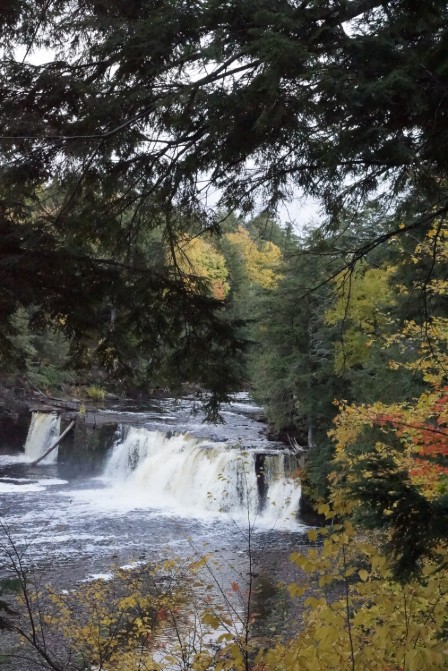
Back to camp for lunch and a nap — jets from the Minnesota National Guard training overhead, audible but never visible; we’re apparently in their flight path. Afternoon, we hiked to Presque Isle Falls near the park entrance — three falls, dark woods, pine needles underfoot, easier going than
yesterday’s rocks but still plenty of roots and board steps. At one point I came up behind Lu on a steep drop and watched an older woman below get into a full catcher’s crouch, hollering that she had her. Lu didn’t need catching, but it was close for a second. I told her afterward it was a decent thing for a stranger to offer, spotting somebody mid-pandemic like that.
We were near a young Chinese couple with serious camera gear most of the day, maybe professionals. At the last of the falls, the woman told us it was getting dark and none of us wanted to be out there after dark in bear country. We found the road instead of backtracking through the woods, and the couple showed up right behind us — must have found the same route. Cut it close on the light.
Ran an errand at the nearest store afterward and it took longer than expected getting back — driving through nothing, no lights, no cars, for miles. Out West you can usually spot a town’s lights from a long way off even in open country. Here the trees just swallow everything past the shoulder of the road. Kept half an eye out for animals the whole way, though we never saw one at night the entire trip.
Wednesday, October 7
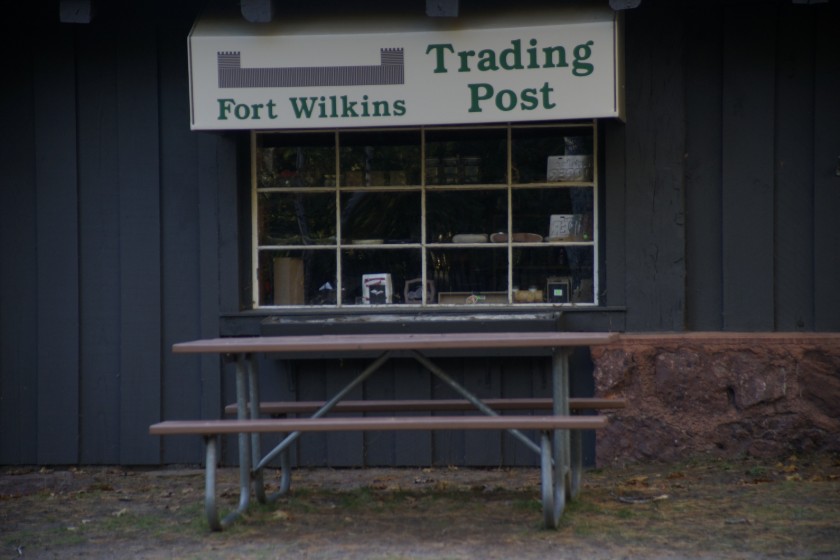
Out of the park and into the Keweenaw Peninsula — cold, windy, whitecaps on the lake. Took longer than planned on account of the twisting road, but it was a good drive, sunny, plenty of color left. Fort Wilkins was built back when everyone expected a copper boom that never came — put up in about five months in 1844, saw almost no real use, which is exactly why it’s still standing in such good shape today. Most of
the original
buildings are intact, room furnishings behind Plexiglas in places, and apparently costumed guides run it in summer. They’d excavated an old privy that doubled as a trash dump and turned up broken dishes, flatware, toys. Self-guided tour with placards
— I don’t mind a guide, but there’s something to be said for going at your own pace, and this one made for a nice, quiet walk at sunset.
Busy campground that night but plenty of open sites. Watched a movie. Wanted to eat out but everything nearby seemed to only run breakfast and lunch this late in the season.
Thursday, October 8
Sarai’s birthday — we texted her and the family. Heard later the girls threw a barbecue for her at the house.
Lu could get texts out where I couldn’t — a few people were trying to reach me and couldn’t, which was a little bit of a headache. WiFi worked, but no cell service.
Took nearly an hour of driving empty wilderness roads before we found a place actually serving breakfast — Slim’s CafeC and Bakery in Mohawk, small and no-frills, but they had eggs and potatoes and Lu grabbed
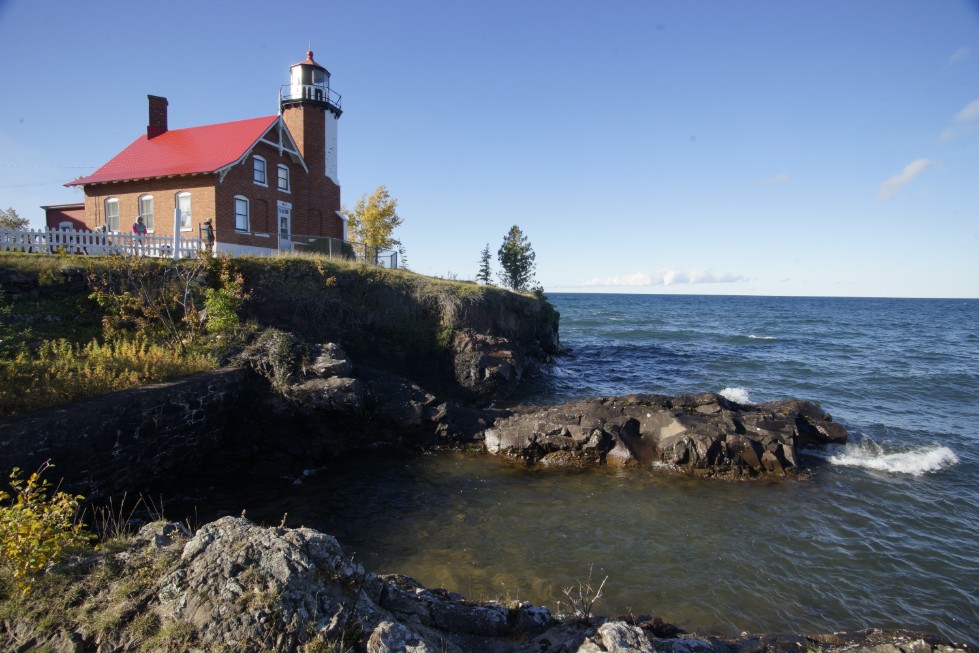
some of their “Monster Cookies” for the road. Cut over to Eagle Harbor hoping for a lighthouse tour, but the ones in this area were either closed for the season or never open to the public to begin with. Watched a ship far out on the lake from a wooden lookout instead — black basalt rock formations all along that harbor taking the waves. Lots of small waterfalls along the road up the north coast, including one
called Jacob Falls, where a young woman was photographing a friend sprawled dramatically next to the sign — turned out his name actually was Jacob.
Stopped at a roadside place called the Jampot, run — as it turns out — by monks. Byzantine Ukrainian Catholic order, black robes, full beards, names like Brother Regius and Brother Sylvester. One of them came hop-running past us on crutches at a good clip, robe flapping, which threw me for a second until I understood what I was looking at. They sell homemade jam, pastries, bread, religious icons. We picked up jam, caramels, a pumpkin cinnamon loaf. Somebody asked how business had held up during Covid — pretty good summer, they said.
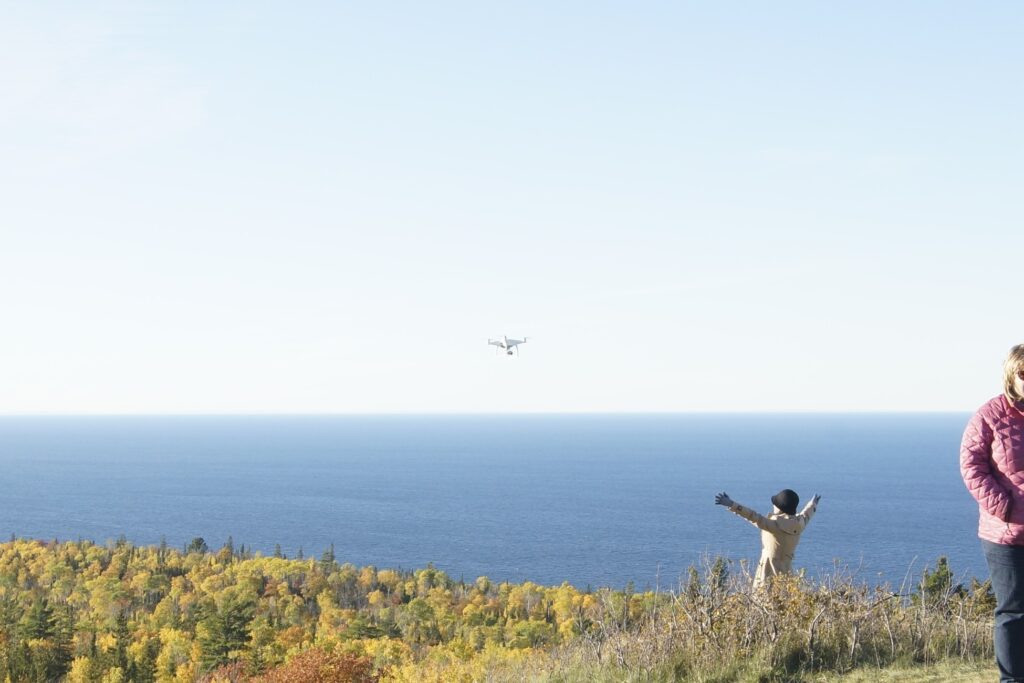
Brockway Mountain Drive after that — one of the most scenic drives in the UP by reputation, and it earns it, straight up in places, with a lot lot at the top where you can see for miles, lake on one side, mountains on the other. You could pick out the different rock and soil just from the vegetation bands running across the slopes. A young guy was flying a drone up there, camera and all, and I’d have liked to see what that footage looked like from 30 feet up, but with everyone crowding in to watch, it didn’t seem like the moment to ask. Tourists from all over that overlook — a big group of young men who looked to be Pakistani, laughing and taking selfies, and a few Amish families, the women in running shoes and white caps with their skirts snapping in the wind.
Watched half of the first Hobbit movie that night before we ran out of steam.
Friday, October 9
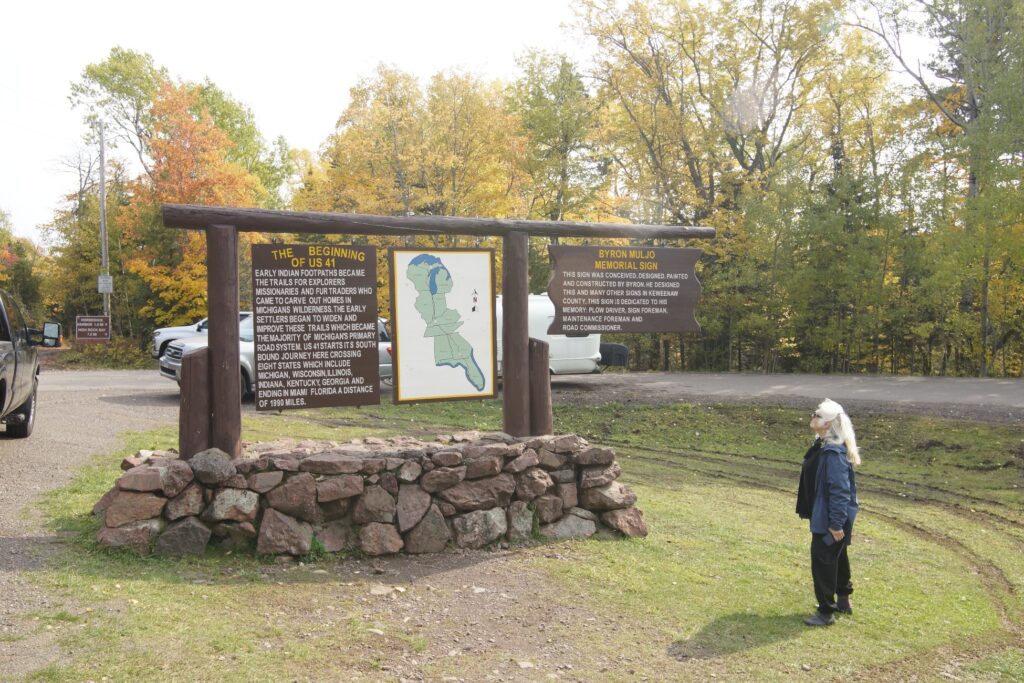
Slept in — last day in the area, so we drove out to see where the road actually stops. Sign said “Road Stops Here” — the northern end of US 41, which runs all the way down to Miami, nearly 2,000 miles, originally a Native American footpath by the sign’s own account. Didn’t look closed, so we kept going. Dirt logging road, rough, heavy woods on both sides, evidence of recent logging and what looked like storm damage — a microburst maybe, judging by how fresh the downed trees looked. Eventually hit an unmarked roadblock and had to turn back and pick our way to Copper Harbor instead, ending up almost where we started, two hours later, with nothing to show for it but having seen the end of the peninsula.
Passed the ruins of the old Quincy Mine on the way in — roofless stone buildings — and made a note to stop for photos on the way out. Turned out tours were running and the last one of the day left in 15 minutes, so we grabbed snacks and jumped on. Because of Covid they weren’t running the old mine cars, so we drove in caravan instead, trailer and all, from the buildings down to the entrance.
The building housing the old hoist was something else — reinforced concrete, brick facing, Italian tile, expensive as hell for its time, and the hoist itself the largest vertical hoist ever built. There was a college choir setting up for some kind of recording session while we were there — recording gear, music stands, a group of maybe 10 or 15 singers in black. Our guide, a young guy named Dylan with hair no hardhat could touch, told us it was Michigan Tech’s “Music in the Mine” event and we could’ve livestreamed it if we’d stuck around.
Would’ve been something to hear, with acoustics like that. I looked it up online later — modern, kind of eerie stuff, and the recording did the room justice.
Caravanned back through Houghton along Portage Lake — felt like we saw the whole town twice over doing it. Quincy was a real working
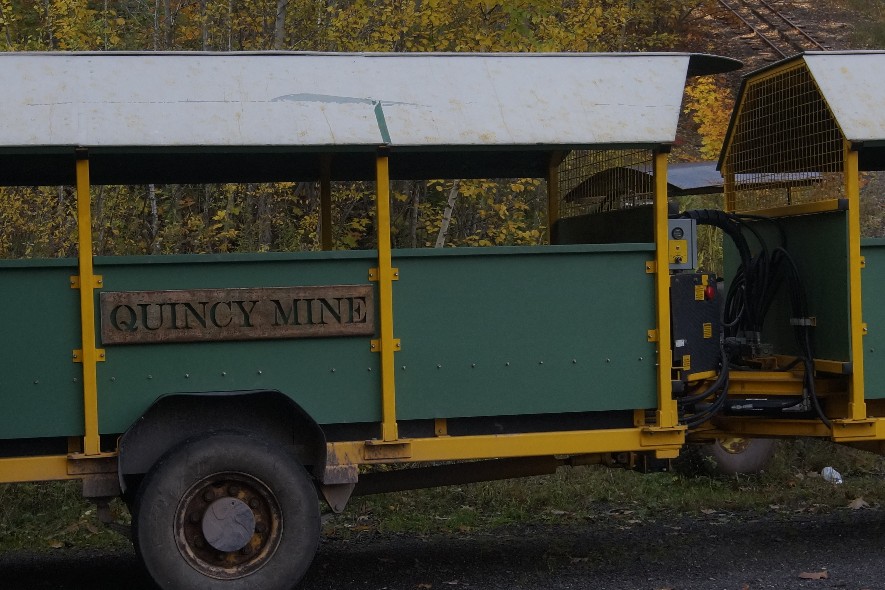
mine, over 90 levels, down to 8,000 feet at the deepest, hot enough down there from the earth’s core that only 5 or 6 levels would’ve been worked at once. Flooded past level 7 now. Michigan Tech used the upper tunnels for its mining engineering program through the ’80s and ’90s — we saw the old practice drilling and blasting sites, even an underground classroom with a blackboard and beat-up desks, though that program stopped in ’96. Dylan figured it might start up again someday.
That’s also why the mine still has electric lighting.
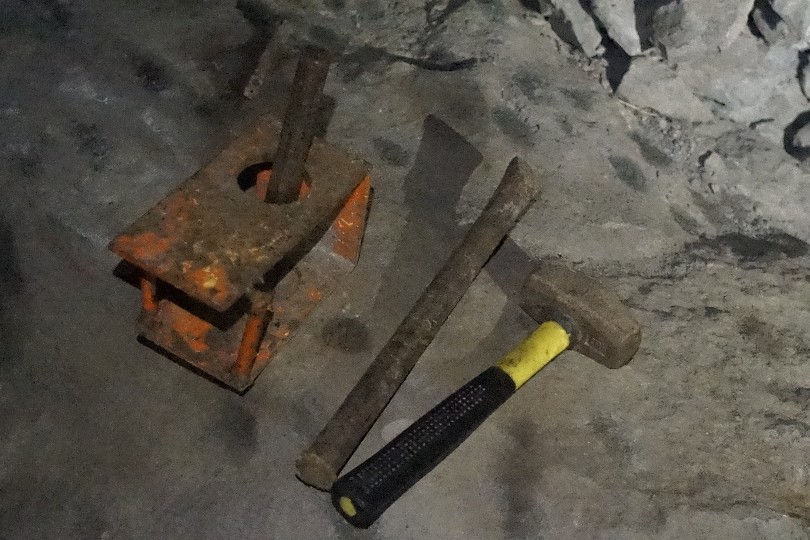
They cut all the lights at one point, like every mine tour does, just to let it sink in what real darkness feels like — your eyes never adjust, they just keep trying. Miners used to sit down there in the dark on purpose before lighting their candles, getting used to the absence of light before they started work. Same tools as at Adventure Mine — drill bits and sledgehammers first, then pneumatic drills that were faster but wrecked your hearing, then eventually electric.
Muddy, rocky floor the whole two thousand feet in — a long walk. Most of the tunnel had been widened for the students, but there was a stretch of the original, five feet tall and maybe seven wide, same as the other mine.
Toward the end Dylan’s tour turned from facts to something more like a eulogy for the men who worked that mine — how much they gave for what became the backbone of modern
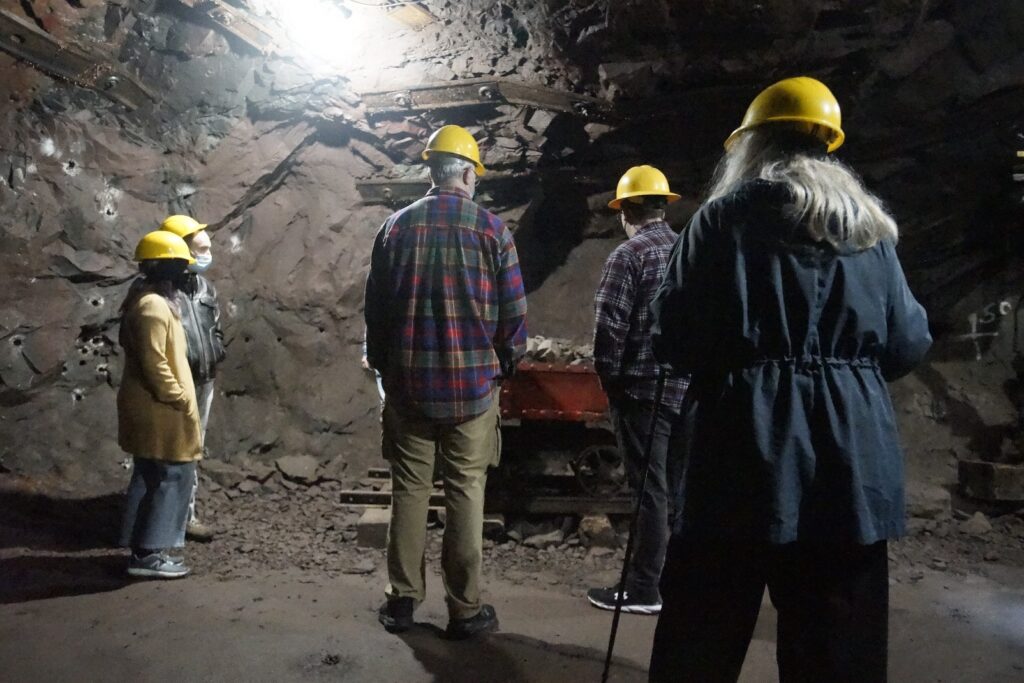
electrical technology, for wages nowhere close to the value of what they built. Somebody in the group asked what he was studying — biochemistry, he said — and somebody else told him he ought to switch to history and teach, the way he told it.
Worth the detour, but by the time we got out of Houghton it was already dark, and Van Riper State Park turned out to be farther and slower going than the hour we’d figured, thanks to miles of construction cones and more dark woods. No cell service or internet at the park either, so late arrivals had to use a dedicated phone line just to register — took a while to even find the thing. Would’ve been simpler to just hook up and deal with it in the morning, but I didn’t want to risk getting bumped by an actual reservation showing up later.
Saturday, October 10
Drove hard to make good time toward home Sunday. Stopped at a roadside smoked fish place with enough room to turn the trailer around — the woman inside had just finished a batch of salmon the day before and showed us the smoker out back. Bought a few pounds, some for us, some for the girls.
Passed a wedding party walking the beach along Lake Michigan on the way toward Mackinac — groom’s party in black and white, bride in a sleeveless white gown with a shawl, wind whipping everything around. Looked cold, looked like a story to tell later.
The state park we’d planned on turned out closed for Covid — the website was vague enough that Lu and I had a friendly disagreement about whether “closed” really meant closed. Found a private campground instead, more of a storage lot for other people’s trailers than an actual campground, but we seemed to be the only overnight guests, so it worked out.
Had the smoked salmon with bread, cheese, fruit for dinner — good stuff. Finished the Hobbit movie, then lost power entirely partway through — lights, hookup, water pump, everything, just went silent. The laptop had its own battery so we watched it out anyway, and the power came back right as the movie ended. Never did figure out why.
Sunday, October 11
Last day. Packed up, cleaned the trailer, and drove south through Michigan, where the color was just starting to turn red, a week or so behind what we’d already seen up north.
Met a talkative couple at a rest stop who wanted a look inside the trailer — the husband was, by his wife’s own description, a hippie who’d been smoking weed, and cheerful about it. Told us about their grown son’s marriage troubles. I gave them my card in case they ever made it to Chicago.
Traffic slowed us down some getting into Indiana and through the Chicago area, but we still made it home by six. The girls had salmon and garlic potatoes waiting — good way to end a trip.